
UAE Corporate Tax in Oracle Fusion: 10 ERP Changes (2026)
How UAE finance teams on Oracle Fusion set up the GL, subledger rules and reports for 9% Corporate Tax, free zone income and the 15% DMTT.

Practical guidance for teams working with Oracle Cloud, Integration Cloud, APEX, Visual Builder, application modernization, data transformation, and enterprise security.
How UAE finance teams on Oracle Fusion set up the GL, subledger rules and reports for 9% Corporate Tax, free zone income and the 15% DMTT.
Explore practical UAE e-invoicing challenges across ERP integration, data quality, VAT compliance, ASP connectivity and business readiness for implementation.
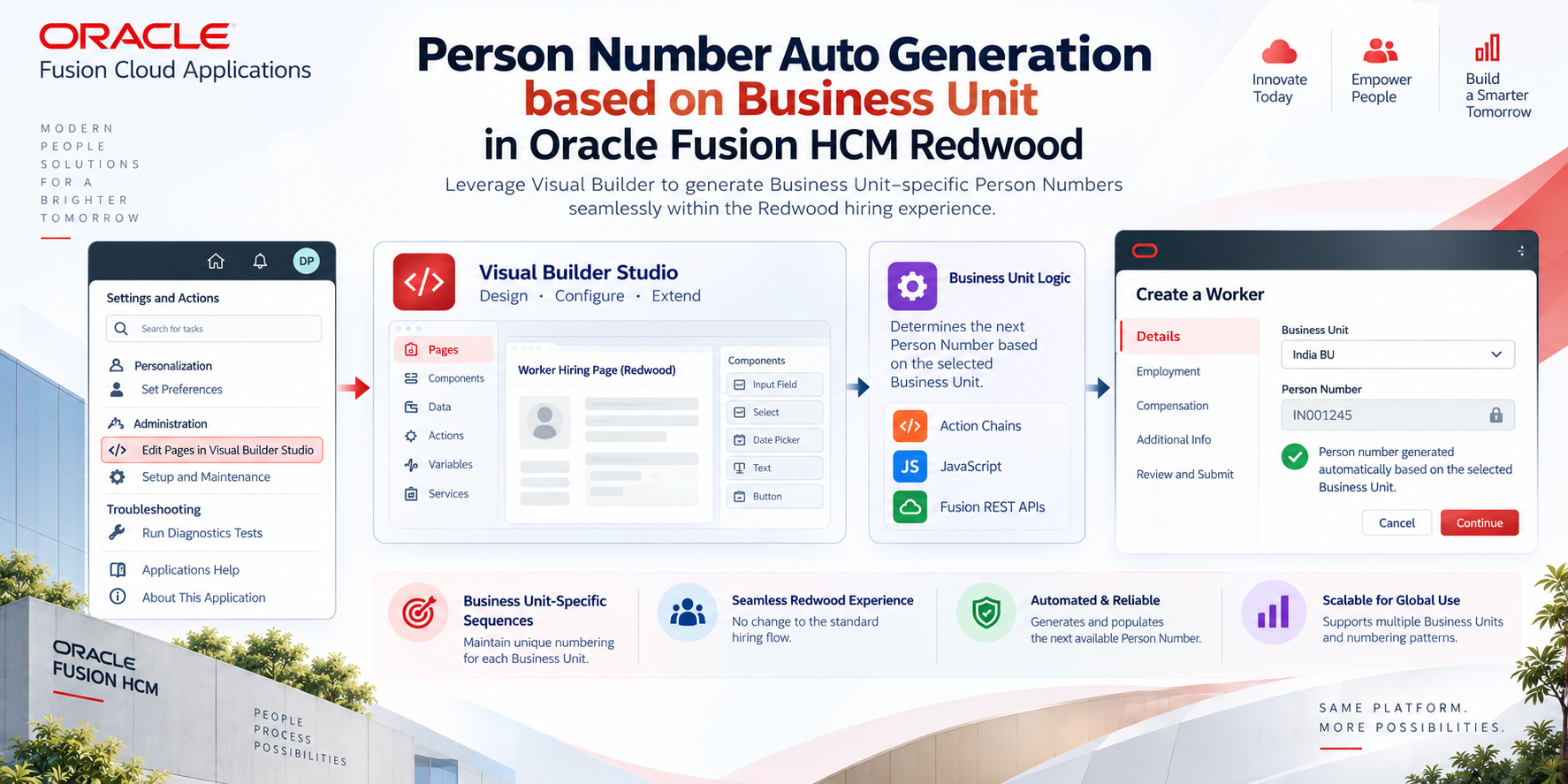
Learn how Oracle Fusion Redwood enables automatic Person Number generation, simplifying employee creation, HR processes, and workforce data management.
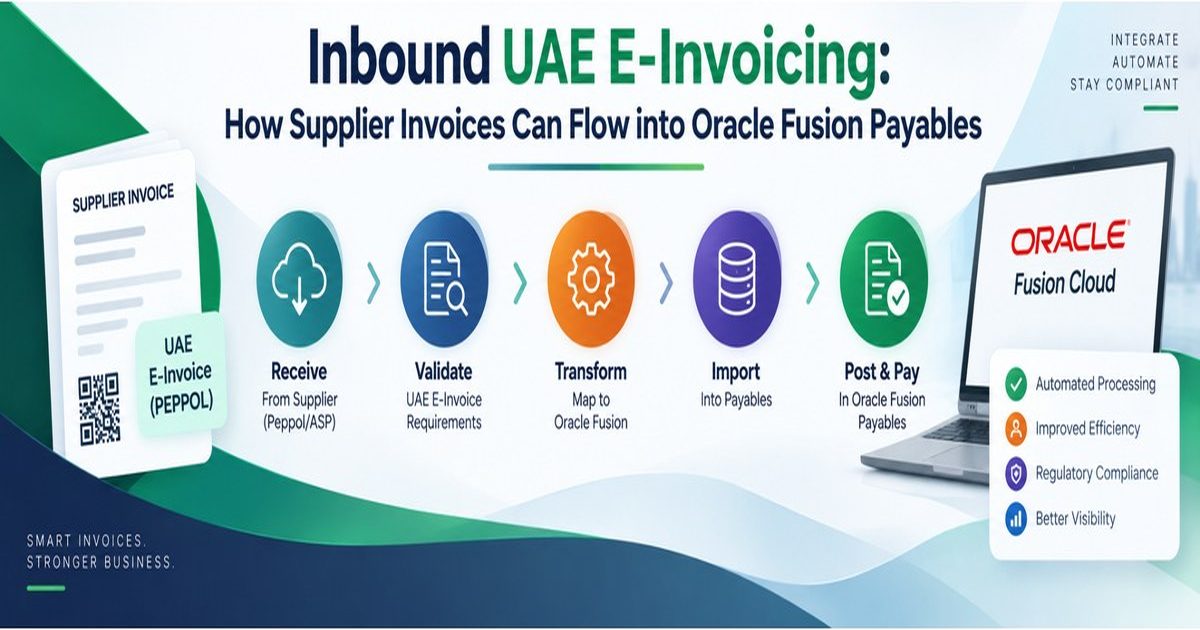
A practical guide to receiving structured UAE supplier e-invoices and integrating them with Oracle Fusion Payables, PO matching and approval workflows
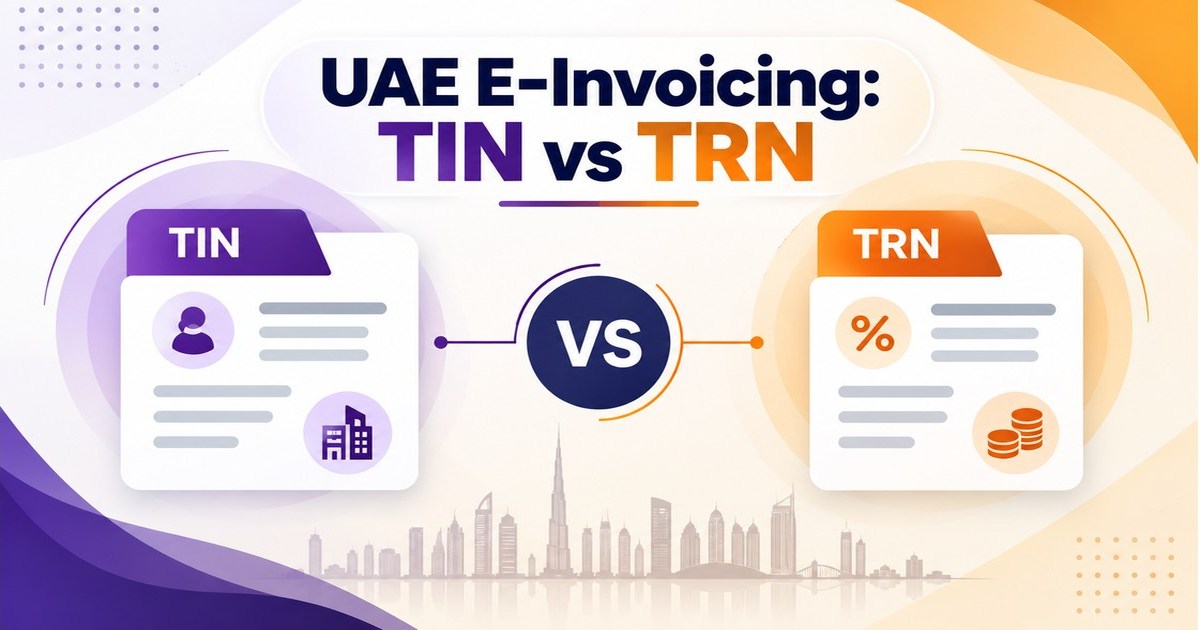
Understand the difference between TIN and TRN in UAE e-invoicing and learn what businesses need for EmaraTax onboarding, tax identification, and compliance.
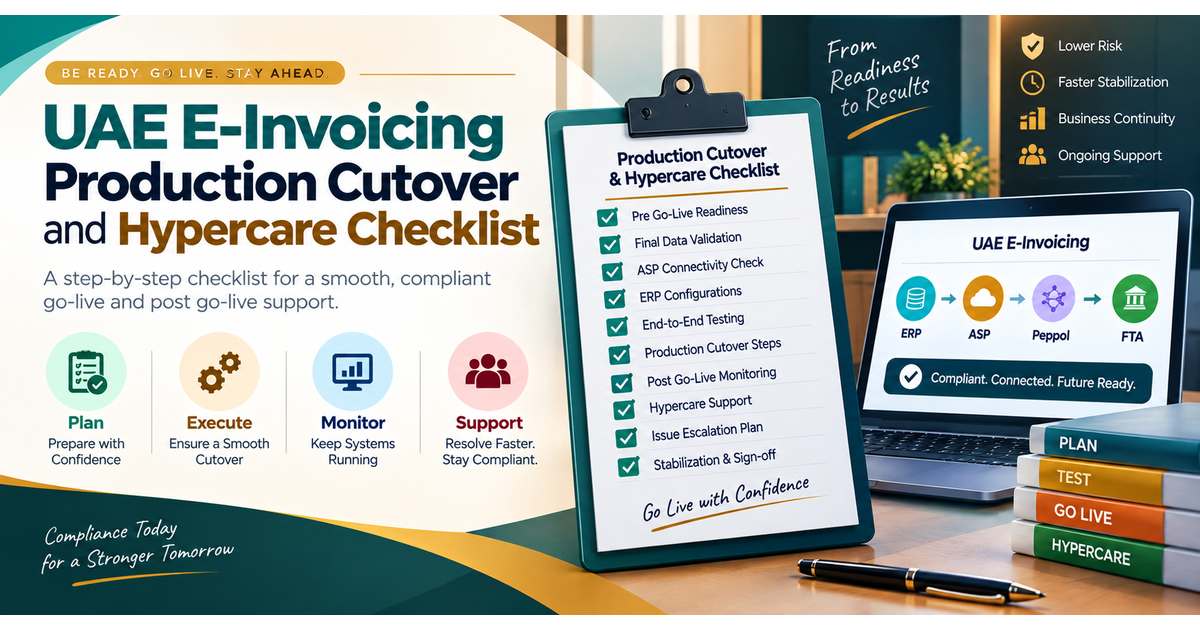
A production cutover and hypercare checklist for UAE e-invoicing covering data, ERP, integrations, ASP, security, support and reconciliation
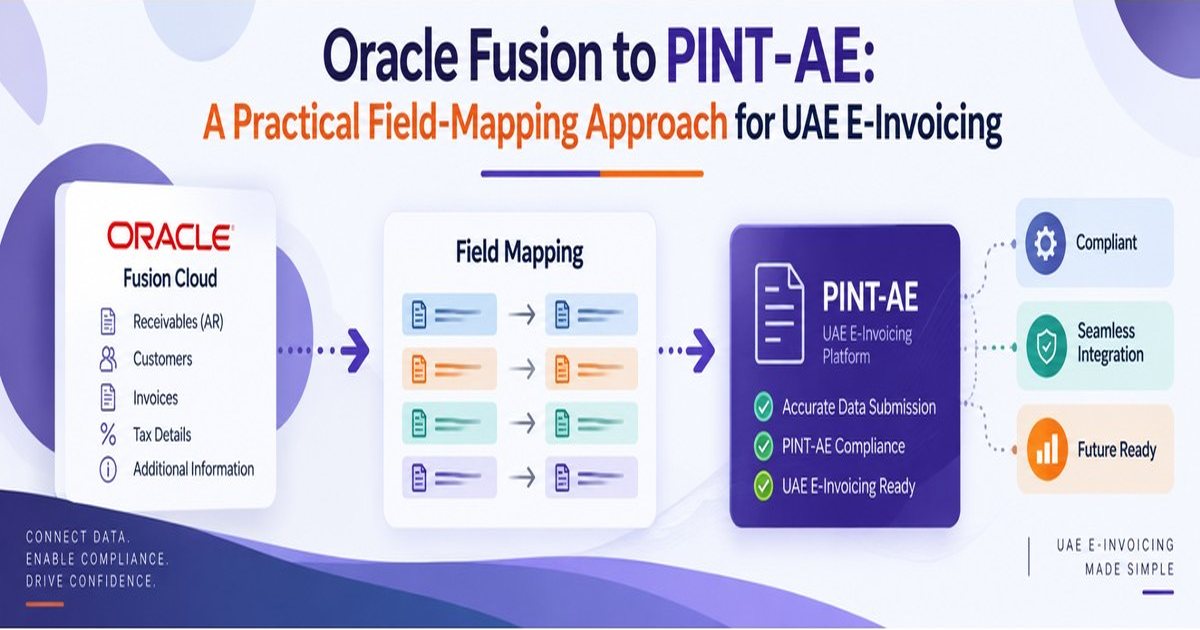
Learn how to map Oracle Fusion invoice data to UAE PINT-AE requirements and identify gaps before development starts.
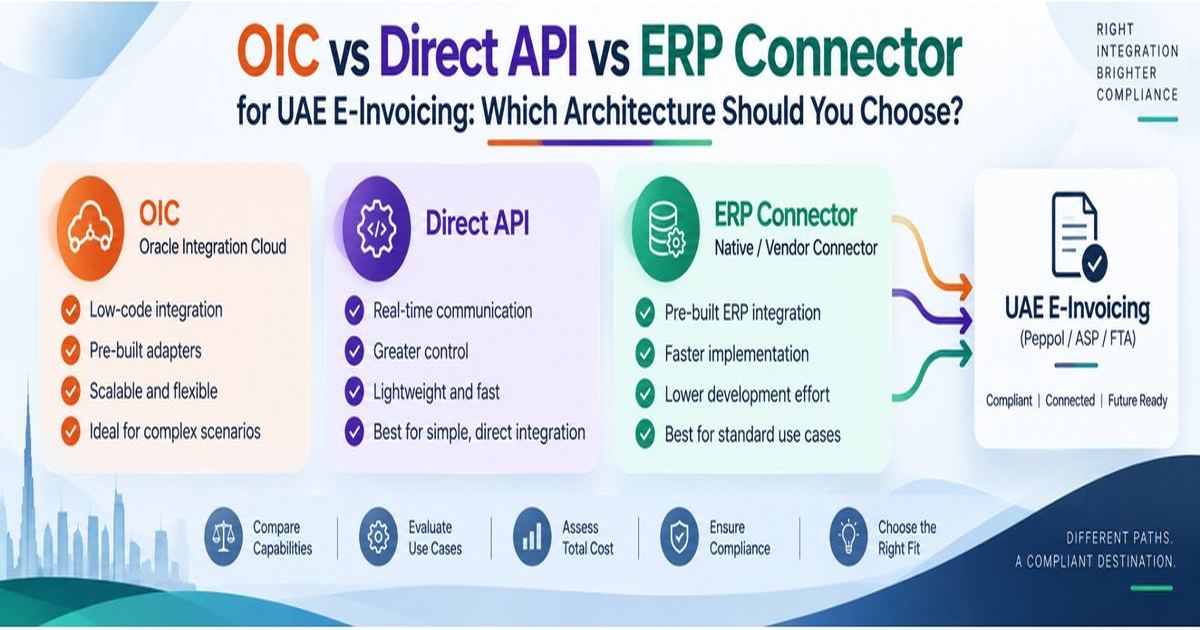
Compare Oracle Integration Cloud, direct API and packaged connector approaches for UAE e-invoicing integration and choose the right architecture for your ERP landscape
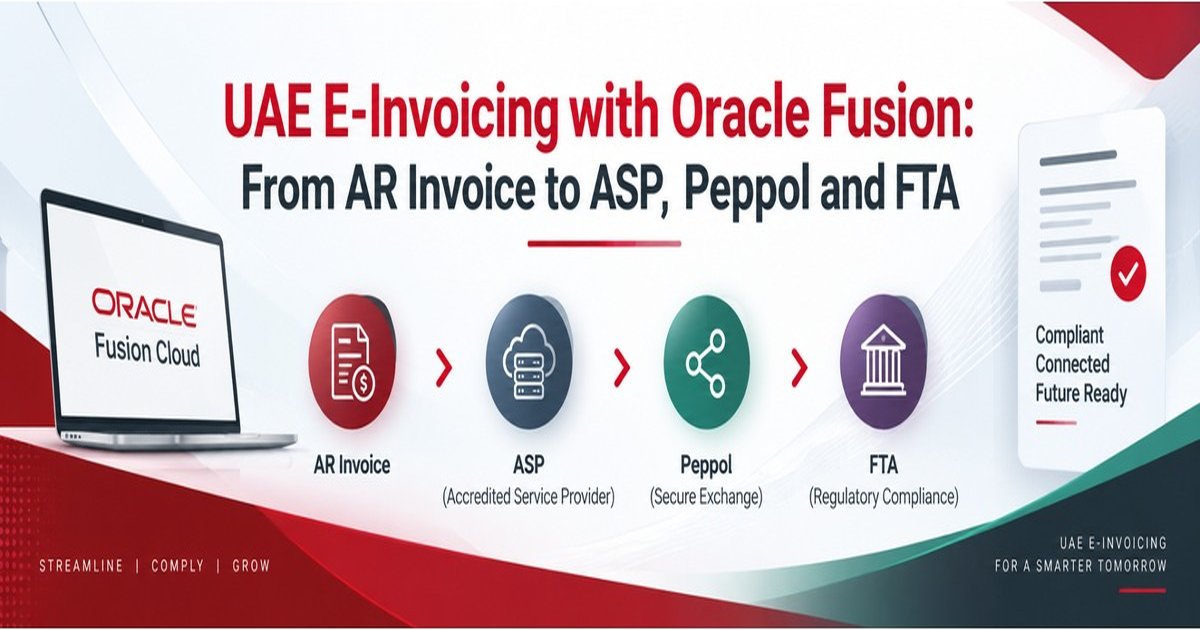
A practical architecture guide for connecting Oracle Fusion Receivables to a UAE e-invoicing service provider, Peppol network and FTA reporting flow.
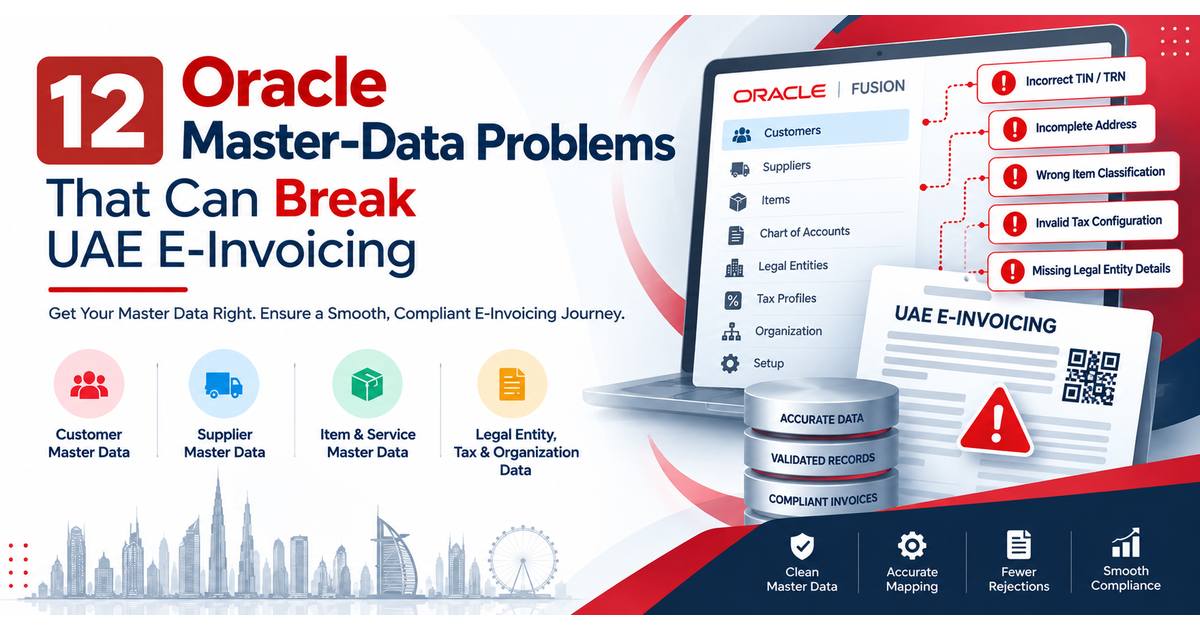
Twelve customer, supplier and transaction-data issues Oracle teams should fix before UAE e-invoicing go-live
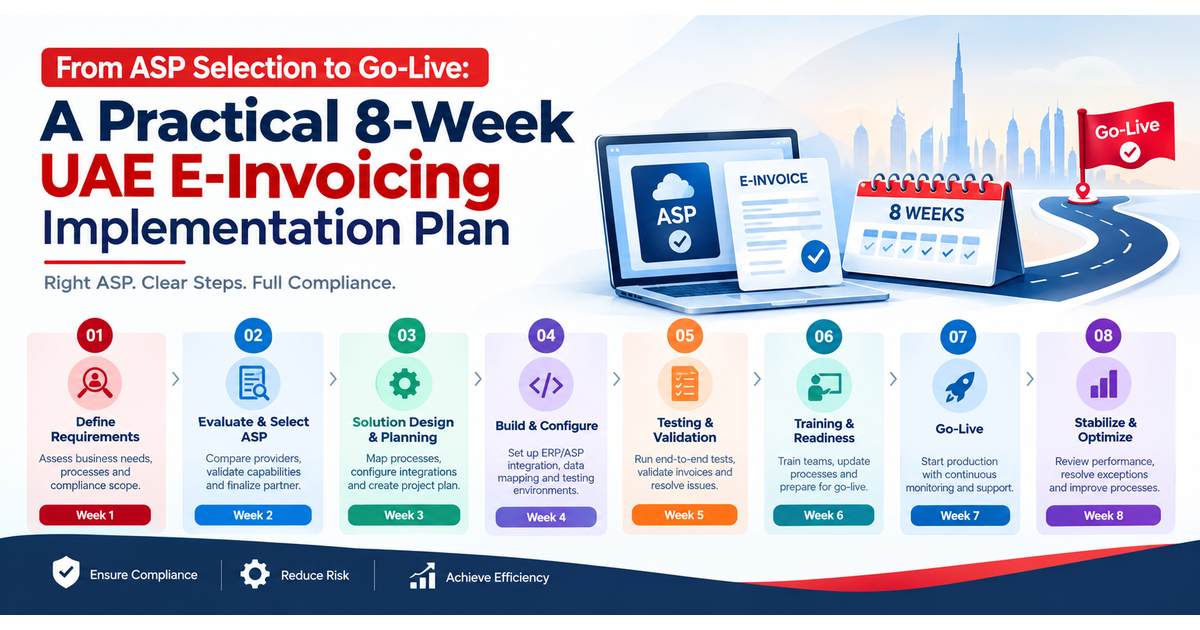
A practical eight-week implementation plan covering UAE e-invoicing architecture, mapping, ERP integration, testing, cutover and support readiness
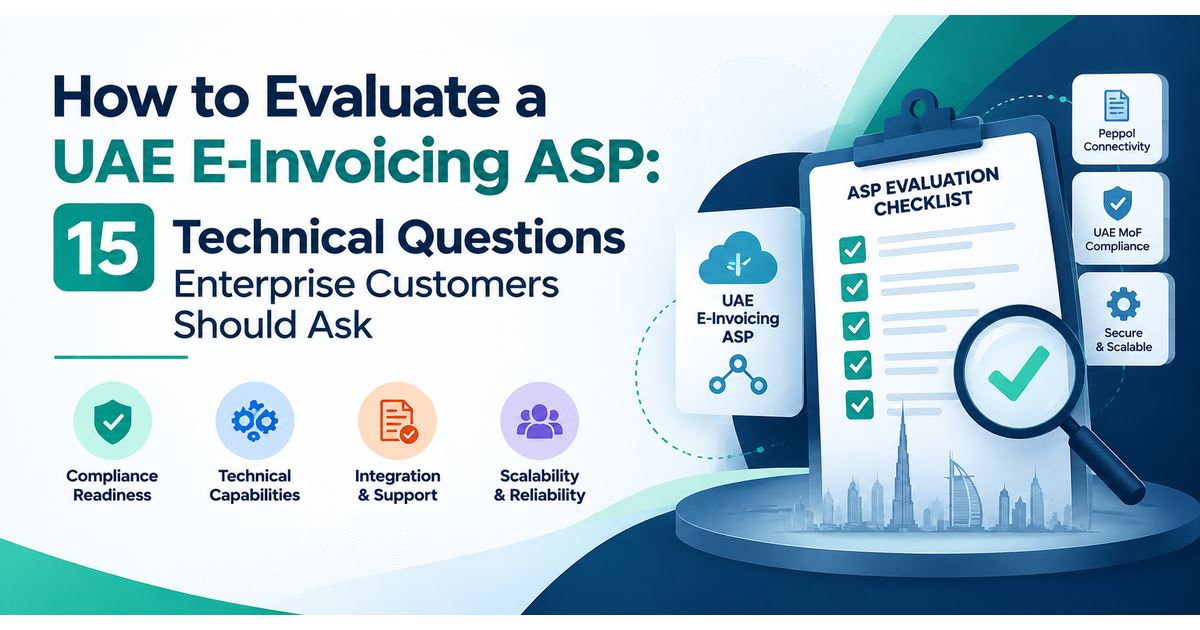
Fifteen technical and operational questions enterprises should ask when evaluating a UAE Accredited Service Provider for e-invoicing
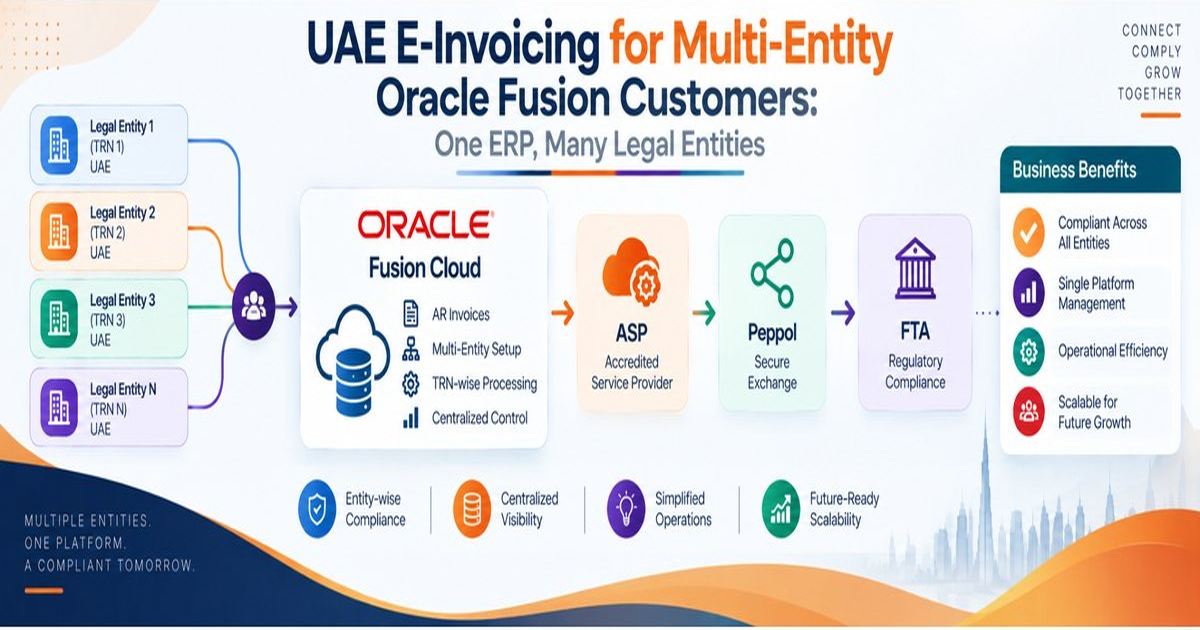
A practical guide for Oracle Fusion groups managing UAE e-invoicing across multiple legal entities, business units and invoice sources
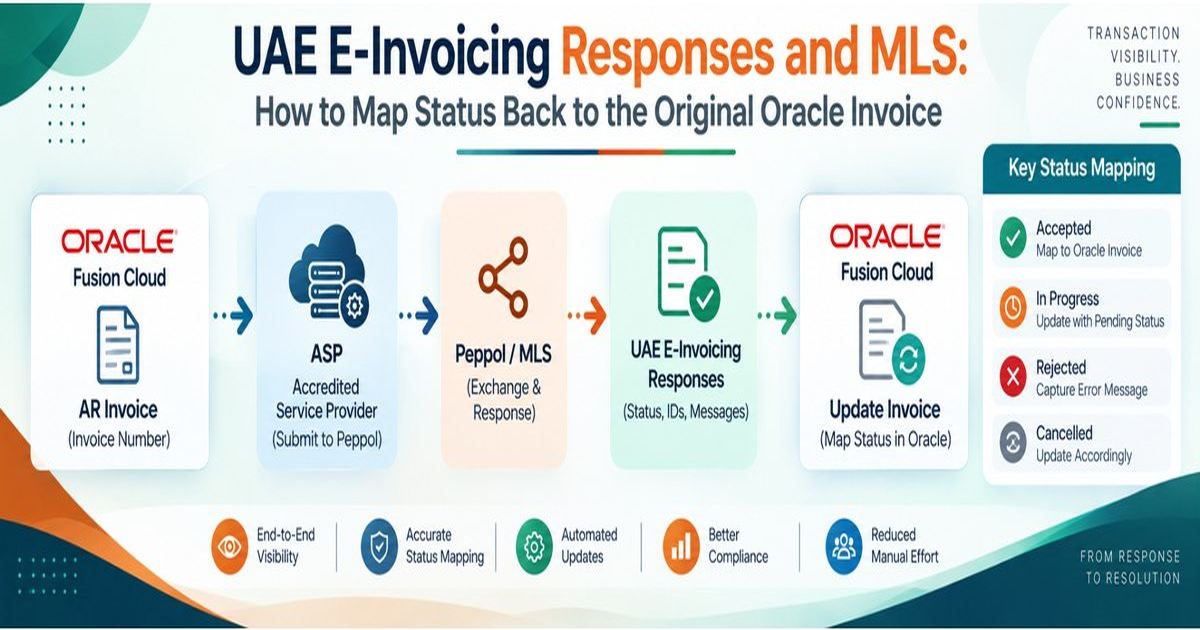
Learn how to map UAE e-invoicing responses and message status back to the correct Oracle invoice using message IDs and reconciliation controls.
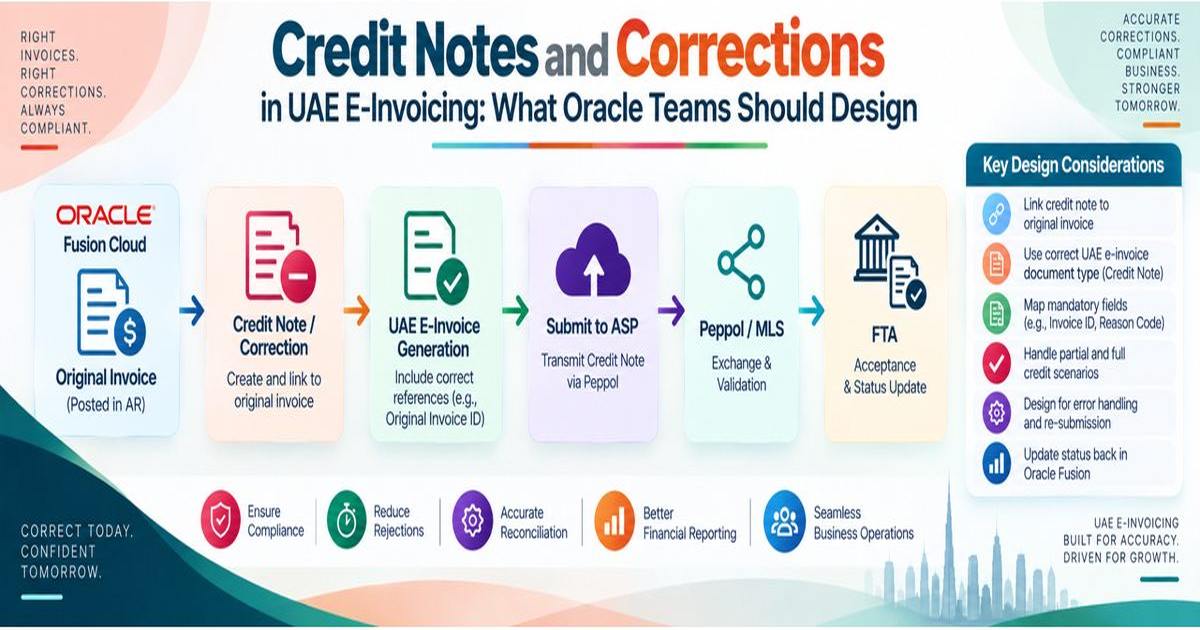
How Oracle teams should design UAE e-invoicing for credit notes, corrections, references, status tracking and reconciliation.
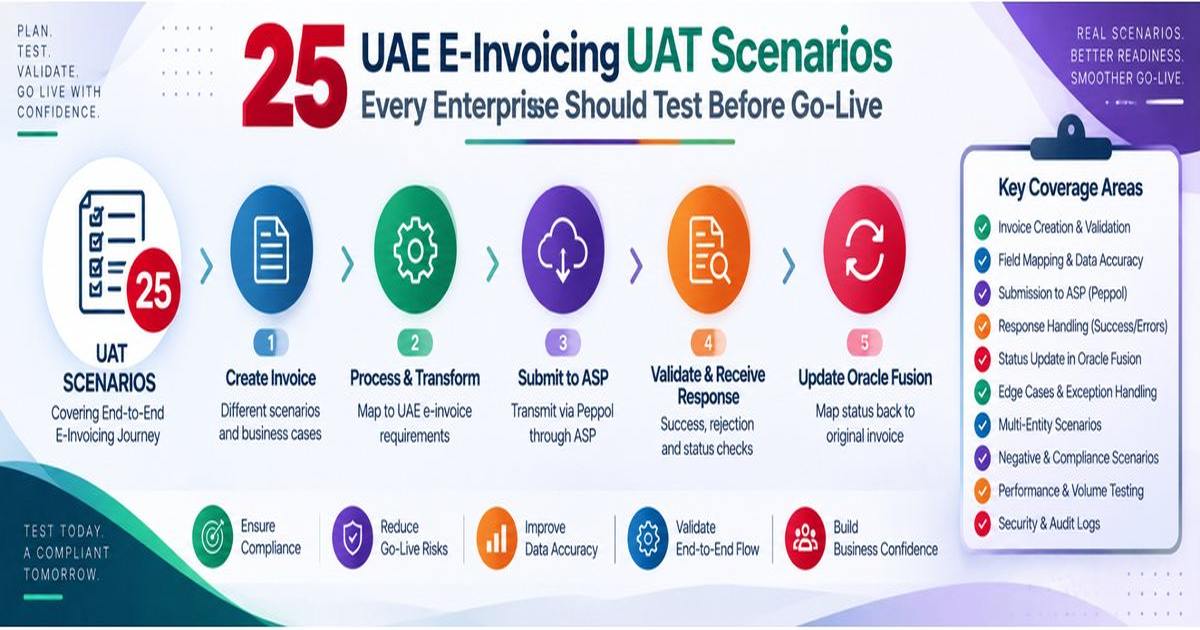
A practical UAE e-invoicing UAT checklist covering invoice creation, data validation, ASP submission, responses, errors, retries and reconciliation
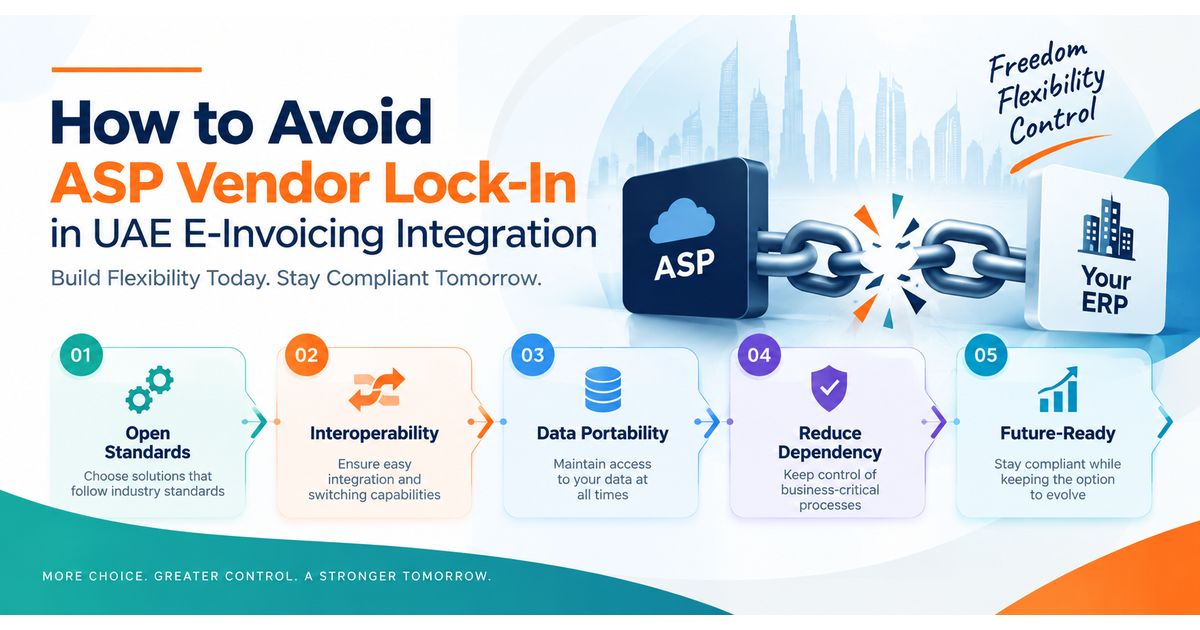
Design UAE e-invoicing integration so your ERP is not tightly coupled to one ASP. Practical tips for canonical data, APIs, status and mapping ownership

Plan a secure single sign-on experience between enterprise identity services and Oracle APEX applications.

Design VBCS experiences that adapt gracefully across languages, regions, and global audiences.

A strategic look at securing, optimizing, integrating, and operating Oracle Cloud environments at enterprise scale.
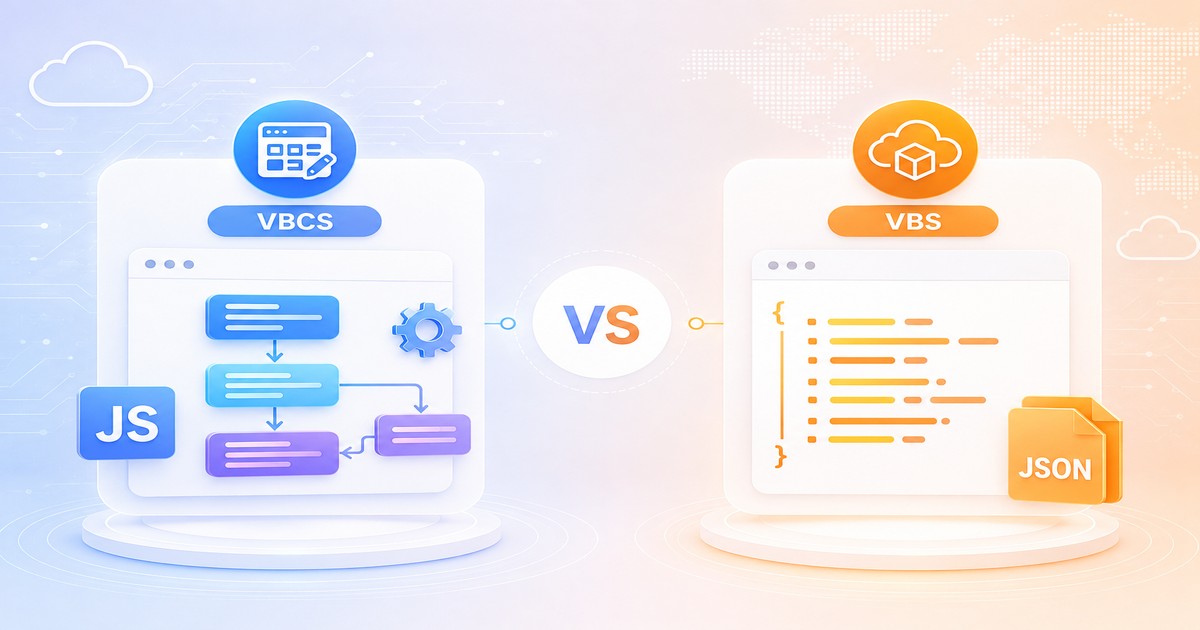
Clarify the complementary roles of Visual Builder Cloud Service and Visual Builder Studio in an enterprise delivery workflow.
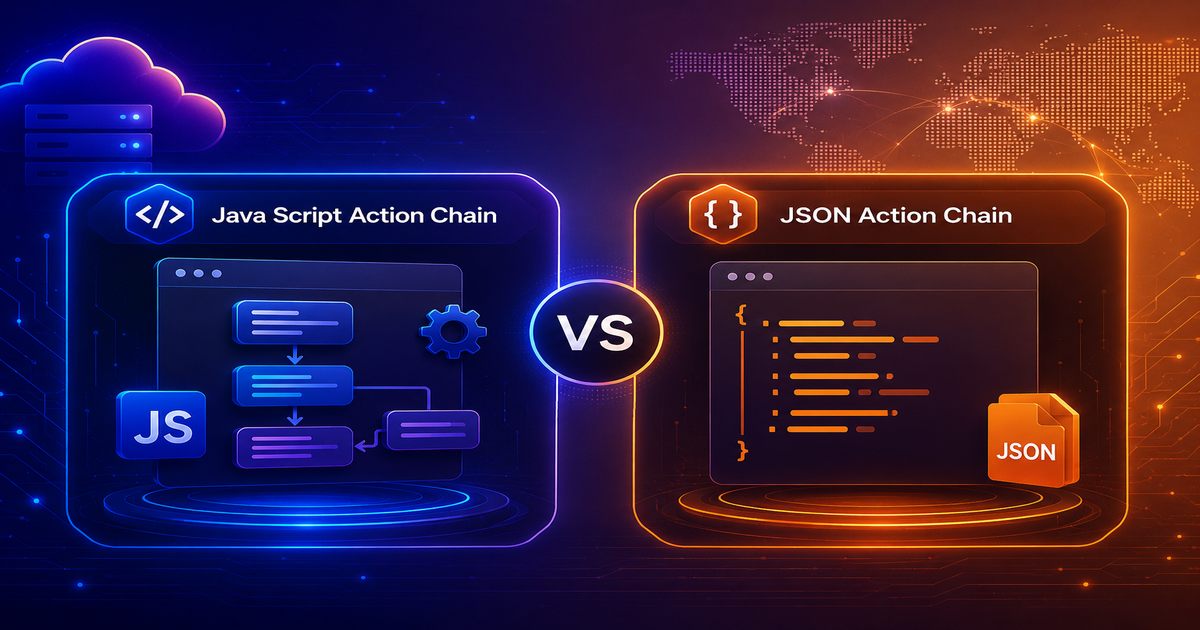
Compare JavaScript and JSON action chains to choose a maintainable way to orchestrate application logic.

Create clear loading states that keep users informed while applications process requests and retrieve data.
Compare the strengths of database-led Oracle APEX and cloud-native Visual Builder Cloud Service for your next application.
Coordinate integration data with global variables and Data Stitch operations for clearer, maintainable workflows.
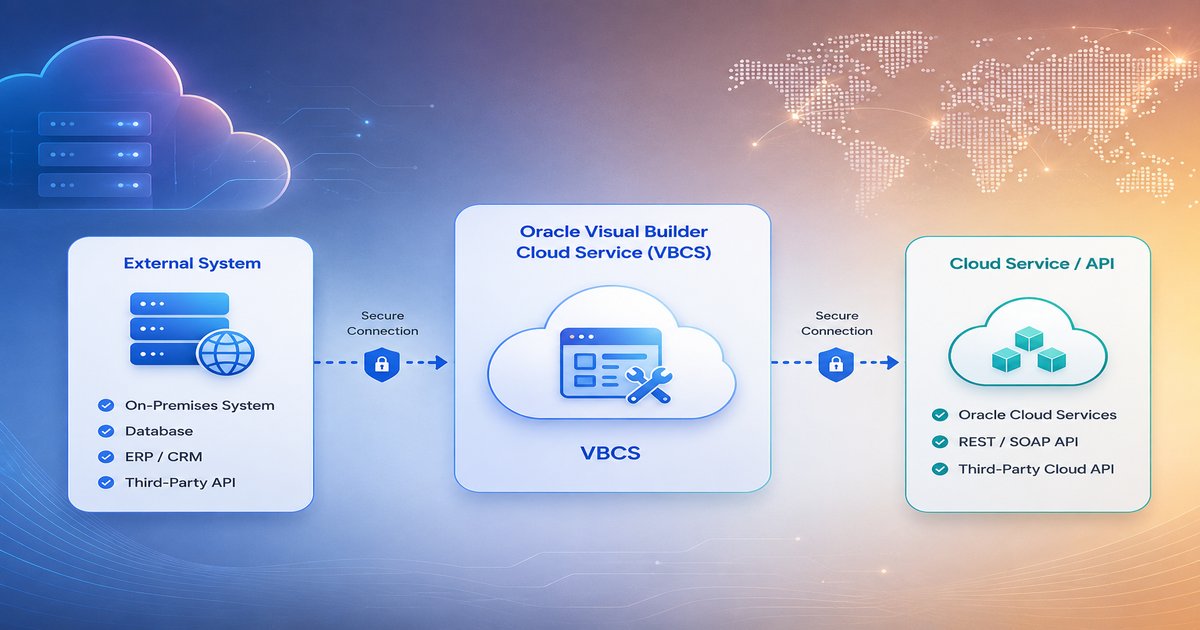
Learn how reusable service connections link VBCS interfaces to secure REST, SOAP, and backend services.
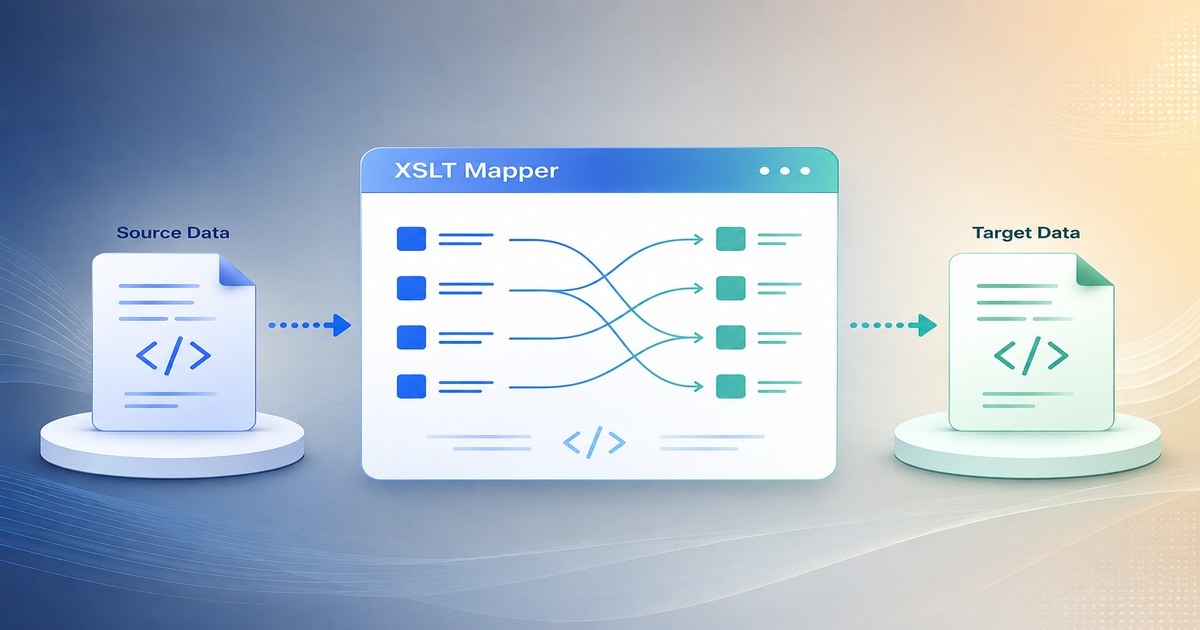
Map, transform, and validate data across systems with clear integration patterns in Oracle Integration Cloud.

Understand how a buffer layer helps manage client-side data, synchronization, and batch operations in VBCS.
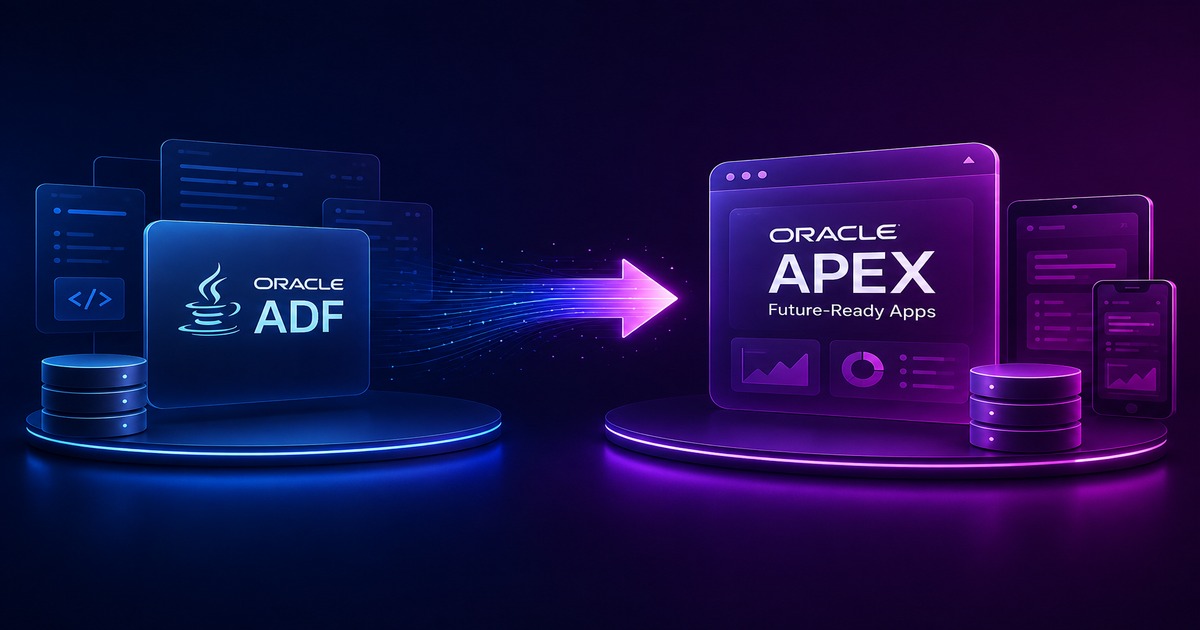
A practical modernization view of moving legacy applications toward a flexible, low-code Oracle APEX future.

Build responsive editable tables by connecting UI state, action chains, and data providers without unnecessary edit lifecycle complexity.

Learn how to integrate Oracle Fusion with Saudi Arabia's ZATCA Fatoora platform, including clearance, reporting, XML, security, monitoring and reconciliation.
A practical UAE e-invoicing readiness guide for Oracle Fusion users covering deadlines, the five-corner model, PINT AE, ASP integration, data, testing and controls.